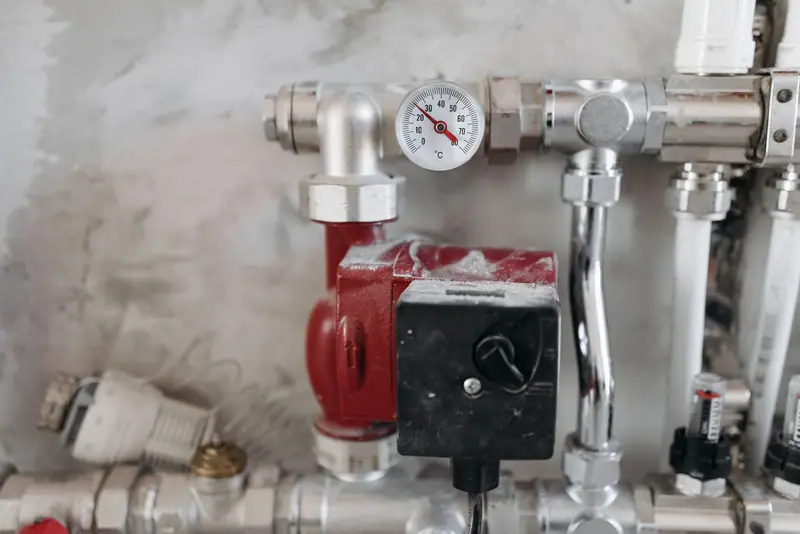
One tap or the whole house?
Start by noticing where the weakness shows up. If only the bathroom sink is slow, the problem is almost certainly at that sink, usually a clogged aerator or a tired cartridge. If the kitchen, the showers and the hose bib are all weak together, the cause sits upstream of all of them.
That upstream stretch includes the pipe from the street, the valve where it enters the house, and any pressure regulator on the line. Which of those is the culprit is what the technician sorts out on site.
Also notice timing. Pressure that is poor at every hour points to a restriction. Pressure that dips mainly when neighbors are watering or at busy times of day may point to the supply rather than your pipe.
How a worn main line causes low water pressure
A water pipe works like a hose. Squeeze it, or let rust build up inside it, and less water gets through no matter how hard it is pushed from the street. Older steel lines narrow from the inside as corrosion layers thicken, so the opening that once carried the whole household shrinks gradually.
Because the change is slow, many homeowners adapt without noticing. They run the shower longer, skip running the dishwasher and the washer together, and only call when it becomes unbearable. A leak can do something similar, since water escaping underground is water that never arrives at the tap.
A line can also simply be too small for the way the house is used today. A pipe sized for one bathroom and a single kitchen struggles when the household has added a second bath, a dishwasher and an irrigation system.
What the pro rules out before blaming the pipe
A good diagnosis eliminates the cheap causes first. The technician checks the main shut-off to see whether it opens fully, because a valve that is only partly open acts like a clamp on the whole house. The curb stop and main shut-off valves are common offenders, particularly older gate valves that were turned rarely.
Next comes any pressure regulator. These wear out, and a failing one can hold pressure low or let it swing. After that, the technician looks at the meter side and at whether the weakness is shared by the surrounding homes, which would suggest the provider's side of the connection.
The aim is to know which piece of the chain is responsible before anyone proposes digging.
How the testing goes
The visit usually begins with questions. When did you first notice it, does it vary through the day, and has anything changed recently, such as plumbing work or a new appliance? The answers narrow the list before any tool comes out.
Then the technician measures pressure at a hose connection and compares it with what the line should deliver, checks flow at several outlets, and watches the meter with everything off. A moving meter with every tap closed suggests a leak. A quiet meter with weak flow suggests restriction. When the picture is unclear, leak locating gear can be brought in, and our guide to water line leak detection describes that step.
When replacing the line is the real answer
Sometimes the tests keep pointing at the pipe itself. The valves open fully, the regulator behaves, the provider's side checks out, and flow is still poor. That usually means the line has narrowed or is partly blocked, and fresh pipe is what restores it.
Our page on main water line replacement covers what that work involves. The technician explains the route, the method and the price before work begins, and there are no hidden fees.
Expect the technician to explain what the tests showed in ordinary words, and to say so if the answer is not the pipe. Sometimes the honest outcome is a valve or a regulator, and that is a smaller job than anyone feared.
A pressure booster is sometimes suggested as a shortcut. It can push harder on a clear pipe, but on a badly narrowed or leaking line it hides the symptom while the line keeps wearing.
Details worth having ready when you call
You do not need technical language. A few plain observations make the first conversation much more useful, and they cost you a minute of noticing.
- Which taps are weak, and whether the hose bib outside is weak too.
- Whether hot water behaves differently from cold.
- Whether the problem is constant, or worst at certain hours.
- Whether any plumbing, appliance or irrigation work happened recently.
- Whether neighbors on the street have mentioned the same thing.
Hot-only weakness points toward the water heater side of the house instead of the service line, and the technician will tell you if that is where the trail leads. Honest triage saves everyone a wasted trip.
Flat ground, but not every lot is equal
Gardena is mostly flat, so there are few steep hillsides to blame. Even so, lots differ. Houses set well back from the road have a longer run of pipe, and a longer run means more places for corrosion to bite. Homes on slightly higher ground, or at the far end of a street, can see weaker flow than their neighbors.
Around Redondo Beach Boulevard in Central Gardena, the small older lots often carry original steel lines, and weak flow is the complaint we hear most. Near Rowley Park, in the Rowley Park Area, post-war homes have lines laid in the same period, so many are showing their age together.
South Gardena, toward Artesia Boulevard, mixes older homes with townhomes, and a shared or long run of supply pipe can make pressure feel uneven between neighbors. That is one more reason the technician compares more than one outlet before drawing a conclusion.
In manufactured-home communities the lines are usually the park owner's responsibility, so contact the owner or park management first. Hard water is common across the region, and scale adds to the narrowing in older pipe.