
Start with the meter: the only check worth doing yourself
Before you call anyone, the water meter can tell you whether the house is losing water at all. It costs nothing and needs no tools. Do it exactly like this, and do not improvise beyond it.
- Make sure nothing is using water. Every tap, the dishwasher, the washing machine, the ice maker and any irrigation timer should be idle. Flush no toilets.
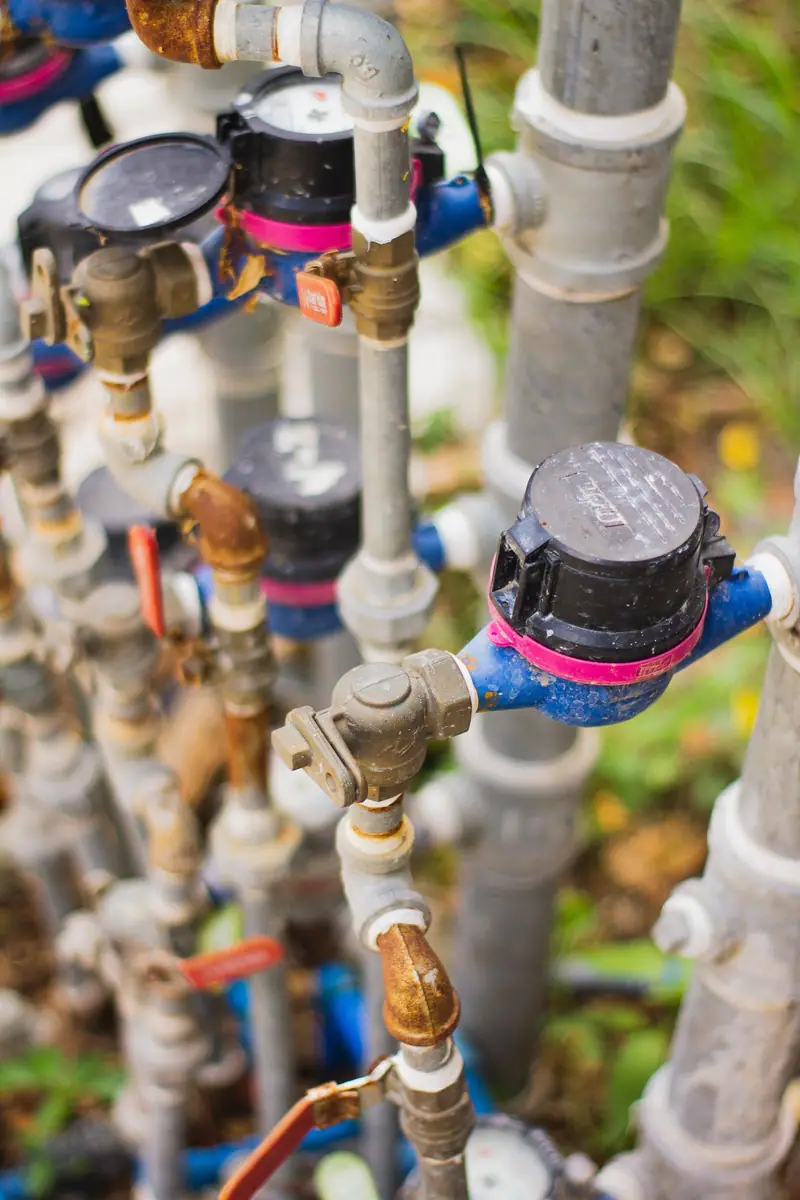
- Open the meter box lid and look at the dial. Most meters have a small leak indicator, often a little triangle or wheel, that turns when any flow passes through.
- Take a clear photo of the dial and the numbers, with the indicator visible if there is one.
- Wait 30 minutes and keep every fixture off the whole time.
- Take a second photo from the same angle and compare the two.
If the numbers or the indicator moved, water is going somewhere. If nothing moved, the line is probably holding, and your high bill is coming from use you have not noticed or from something intermittent. Either way, a photo pair is a useful thing to tell the technician about on the phone.
That is the end of the do-it-yourself list. Do not dig to look for the pipe, and do not pry up the meter box or the valve inside it.
What a buried leak looks like from the yard
Water under pressure does not always come to the surface where it escapes. It finds the easiest path, through loose soil and along the outside of the pipe, and may show up some distance away. So the signs outside are clues, not an exact address.
- A strip of lawn that is greener, spongier or wetter than the rest, especially in dry weather.
- A patch of soil or concrete that stays damp or has started to sink or crack.
- Moss, mud or standing water near the front of the property, or against the foundation.
- The sound of running or hissing water when the house is otherwise quiet.
- A pressure drop at the taps, or water that sputters, which can come from several causes. Low pressure from the main line has its own page.
Keep in mind that some leaks leave no trace at all. Dry, sandy or well-draining ground can swallow a steady loss without any wet spot, and a leak under a driveway or slab can drain into fill beneath it.
How water line leak detection finds the spot without opening the ground
The point of locating is to avoid exploratory digging. Technicians generally combine a few approaches, picked to suit the line and the surface.
Listening. A leaking pressurized pipe makes a distinct noise. Sensitive microphones and ground sensors pick it up at the meter, the valve or the surface, and the sound is strongest nearest the leak. Hard surfaces carry it well, and quiet moments of the day help.
Tracing the route. Before listening along a path, the crew needs to know where the line actually runs. Electronic tracing tools follow the pipe underground so the listening happens in the right place. This matters on older lots where the original routing was never recorded.
Pressure testing. By isolating sections of the line and watching whether pressure holds, a technician can narrow a long run down to a shorter stretch. It is the step that separates a leak on the line from one on the house side.
Tracer gas and thermal imaging also exist, and the technician decides whether they are worth bringing. No method is perfect on every line, and the result is a marked location with a good level of confidence, not a certainty.
On the line or inside the walls?
The distinction decides who fixes what and how much work it involves. A leak between the meter and the house is a service line problem. A leak past the point where the pipe enters the building belongs to the home's interior plumbing, such as a fixture, a supply pipe in a wall or a water heater connection.
The technician can test the two sides separately, usually by closing the main inside the house and watching the meter. If the meter stops moving with the main closed, the loss is likely inside. If it keeps moving, the loss is likely upstream of that valve, on the buried part.
When the answer is "inside", you will be told so honestly, and you will not be pushed toward digging the yard. Ownership of the buried section usually follows the meter or property line, but check with your water provider, because the split is not the same everywhere.
Leaks and the kinds of homes in Gardena
Where the leak tends to be depends on the era of the house. Many older homes still have their original galvanized steel service lines. From the inside out, mineral buildup narrows the pipe and corrosion weakens the walls, and pinholes and failed joints become more likely as the pipe ages. If that sounds like your house, see the page on replacing an old service line.
In South Gardena, along the Artesia Boulevard side, mixed housing means a mix of line ages on the same block, and a neighbor's experience may not match yours. Near Mas Fukai Park, the post-war streets covered on the Mas Fukai Park Area page often have established trees and lawns, so root pressure and long runs under planting can matter.
In this mild climate, the usual suspects are age, corrosion, shifting ground and roots.
Living in a manufactured-home community? The water lines within these parks are usually the park owner's responsibility, so contact the owner or park management before arranging anything yourself.
After the leak is found
Finding the spot is not the same as deciding what to do about it. A single failed joint on an otherwise sound line may be handled with a targeted repair at one dig location. A line that is worn along its whole length may be a candidate for replacement, and a technician will say so plainly if that is what the evidence shows.
The options go through you before work starts. The technician explains what the leak location means for your yard, what your choices are and what each one costs, with upfront pricing and no hidden fees. If replacement is on the table, ask about trenchless methods too, since a known leak spot can help plan where access points go. Nothing happens until you agree.
Calls are answered around the clock, and same-day and emergency dispatch is available where possible.